

Terravia Biosciences
19.4 kW solar. 2,328 units generated every month.
- Commercial
- Rooftop solar
- Baugujjar, Gurgaon
- Agro-biotechnology
- 19.4 kW
- Installed capacity
- 2,328 units
- Avg. monthly generation
- 665%
- Generation vs consumption
- 34 months
- Simple payback
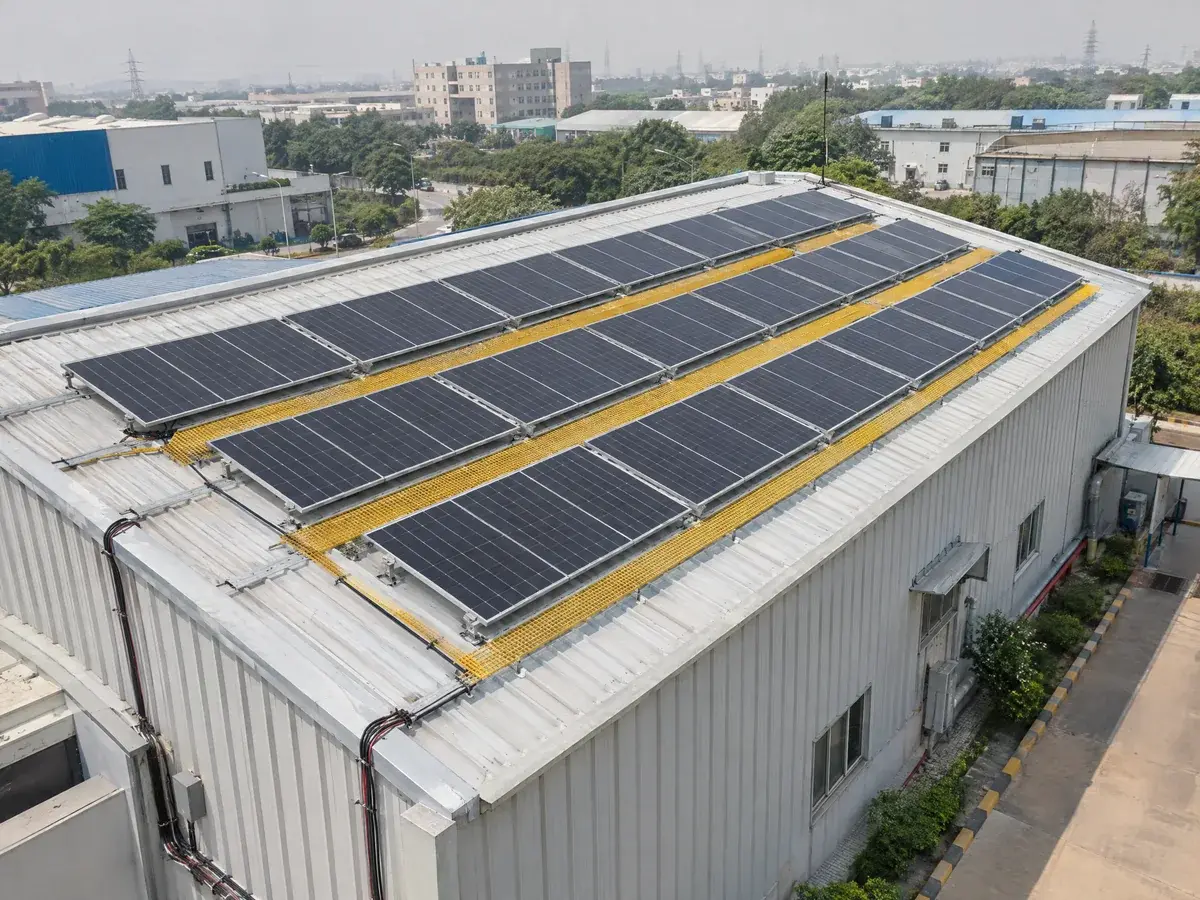
An agro-biotechnology business based in Gurgaon.
Terravia Biosciences is a commercial business operating in the agro-biotechnology sector, located in Baugujjar, Gurgaon. With electricity supporting its business operations, the facility had an opportunity to use its tin-shed rooftop to generate power on-site through solar.
A monthly electricity bill of approximately ₹1,927.
Before solar, Terravia Biosciences reported an average monthly electricity consumption of 350 units, with an electricity bill of approximately ₹1,927.
Rooftop solar offered an opportunity to use the available roof space to generate electricity at the facility itself and move towards greater control over its energy requirements.
A 19.4 kW rooftop solar system installed on the tin shed.
Powermore installed a 19.4 kW rooftop solar system at Terravia Biosciences, using Avaada TOPCon modules and a Sungrow 20 kW solar PV string inverter.
- Modules
- Avaada TOPCon NON-DCR 720 Wp
- Inverter
- Sungrow 20 kW Solar PV String Inverter
- Location
- Baugujjar, Gurgaon
- Roof type
- Tin shed
- Average monthly generation
- 2,328 units
- Sanctioned load
- 19.5 kVA
- 01Generate
N-Type TOPCon modules on the tin shed roof
- 02Convert
Sungrow 20 kW Solar PV String Inverter
- 03Self-consume
Site load is served first, behind the meter
- 04Save
Generation equal to about 665% of reported monthly use
A rooftop generating significantly more electricity than the reported monthly consumption.
The solar system is expected to generate approximately 2,328 units every month. Against the reported pre-solar consumption of 350 units/month, the system's estimated generation is equivalent to approximately 665% of the facility's reported monthly electricity consumption.
This indicates significant potential for solar generation beyond the facility's reported consumption. How much of this generation translates into actual savings will depend on on-site consumption, surplus export and the applicable grid arrangements.
The numbers behind the installation.
The project has an estimated 34-month simple payback period, representing a long-term investment in on-site renewable energy generation.
- Pre-solar monthly bill: ₹1,927
- Pre-solar consumption: 350 units/month
- Effective pre-solar electricity rate: ₹5.51/unit
- Average monthly solar generation: 2,328 units/month
- Generation above reported monthly consumption: 1,978 units/month
- Simple payback: 34 months
What the numbers actually show.
- 01Making productive use of available rooftop space.
The 19.4 kW installation turns Terravia Biosciences' tin-shed rooftop into an on-site source of renewable electricity.
- 02Significant generation potential.
With average monthly generation of approximately 2,328 units against reported consumption of 350 units, the system has substantial generation capacity relative to the facility's stated electricity requirements.
- 03A defined investment recovery period.
With a simple payback period of approximately 34 months, the project offers a defined timeline for recovering the solar investment.
Before solar, and with solar.
| Metric | Before solar | Solar system |
|---|---|---|
| Monthly electricity consumption | 350 units | N/A |
| Monthly electricity bill | ₹1,927 | N/A |
| Installed solar capacity | N/A | 19.4 kW |
| Average monthly solar generation | N/A | 2,328 units |
| Solar generation vs consumption | N/A | 665% |
| Simple payback | N/A | 34 months |
Solar generation is significantly higher than the facility's reported monthly consumption. Savings will depend on actual self-consumption, surplus export compensation, fixed and demand charges, taxes and applicable grid arrangements.
Turning available rooftops into productive energy assets.
For businesses, solar offers an opportunity to generate electricity on-site and make better use of available infrastructure. Terravia Biosciences' rooftop installation is another example of putting commercial roof space to work through solar.